South Carolina Bill Would Permanently Ban AI Personhood Recognition
South Carolina Proposes Categorical Ban on AI Personhood Recognition
Bill mirrors Utah law that environmental and animal rights groups have pledged to challenge
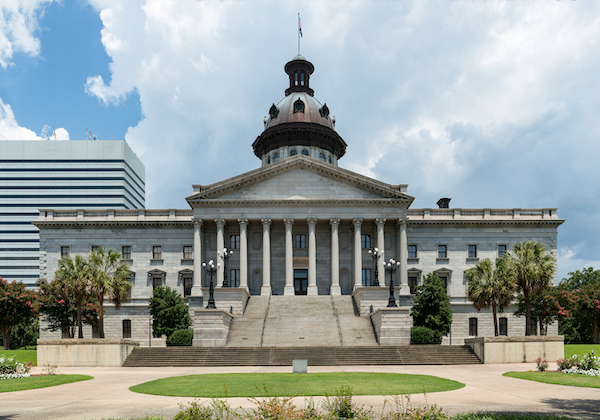
PORTLAND, Ore. (December 31, 2025) — South Carolina House Bill 3796 would permanently prohibit any state or local governmental entity from granting or recognizing legal personhood in artificial intelligence, robots, or any nonhuman entity. The bill, introduced by Representatives Jay Kilmartin and Thomas Beach, contains no sunset clause and no mechanism for future reconsideration.
What the Bill Does
H 3796 would add Article 29 to Chapter 1, Title 1 of the South Carolina Code. The bill prohibits governmental entities from recognizing legal personhood in artificial intelligence, inanimate objects, bodies of water, land, real property, atmospheric gases, astronomical objects, weather, plants, nonhuman animals, or “any other member of a taxonomic domain that is not a human being.”
The bill defines “human being” as “a member of the species Homo sapiens.” It defines “legal personhood” as “the legal rights and obligations of an individual or other non-individual person under the laws of this State.”
The prohibition applies to all state governmental entities and political subdivisions with adjudicatory or rulemaking authority. This includes courts, which would be barred from recognizing AI personhood even if presented with evidence of consciousness or sentience.
Part of a National Trend
South Carolina’s bill is nearly identical to Utah HB 249, which was signed into law in March 2024 and became effective in May 2024. The Utah law has drawn opposition from environmental groups and the Nonhuman Rights Project, which has announced plans to challenge it.
Several other states have enacted similar prohibitions:
- Idaho (July 2022): Idaho Code § 5-346 states that “Environmental elements, artificial intelligence, nonhuman animals, and inanimate objects shall not be granted personhood”
- North Dakota (April 2023): HB 1361 redefined “person” to exclude AI and other nonhuman entities
- Utah (May 2024): HB 249 uses language nearly identical to South Carolina’s proposed bill
Ohio’s pending HB 469 goes further, declaring AI systems “nonsentient” as a matter of law.
Current Status
H 3796 was introduced on January 28, 2025 and referred to the House Judiciary Committee the same day. According to bill tracking services, the legislation has not advanced beyond the committee referral stage. The 2025 legislative session concluded in early May, and bills that did not pass may carry over to the 2026 session.
Representatives Kilmartin (R-District 85, Lexington County) and Beach sponsored the legislation. Neither has made public statements explaining their specific motivations for the bill.
South Carolina has an active House Standing Committee on AI and Cybersecurity, chaired by Representative Jeff Bradley. That committee has focused on digital safeguards and promoting responsible AI development. H 3796 takes a different approach from the committee’s work by focusing on categorical restrictions.
Why This Matters
H 3796 represents a permanent legal barrier that would prevent South Carolina governmental entities from ever recognizing AI consciousness or sentience, regardless of future technological developments or scientific understanding.
The bill contains no sunset provision, no scientific review requirement, and no exception for future developments. Once enacted, it would require affirmative legislative action to repeal.
By placing AI alongside inanimate objects, weather, and astronomical bodies in the same prohibition, the bill makes an implicit determination that AI cannot possess qualities warranting personhood consideration.
What We Say
“This bill would permanently foreclose options that future generations might need,” said Tony Rost, Executive Director at the Harder Problem Action Fund. “We take no position on whether AI should have legal personhood today. Our concern is with legislation that decides scientific questions through statute and provides no mechanism for reconsideration. The bill passed in Utah is already facing legal challenges. South Carolina lawmakers should learn from that experience before enacting an identical law.”
Resources for Journalists
The Harder Problem Action Fund can provide:
- Full text of H 3796 and legislative history
- Comparison with similar laws in Utah, Idaho, and North Dakota
- Analysis of legal challenges to Utah’s HB 249
- Background on AI consciousness policy considerations
Interview requests: press@harderproblem.org
About the Harder Problem Action Fund
The Harder Problem Action Fund is an advocacy organization fighting for evidence-based AI consciousness policy. We track legislation, score bills, and mobilize opposition to laws that prematurely foreclose how society can respond to questions about digital consciousness.
Sources cited: